Achilles Tendinopathy: What You Need to Know, How to Recover Stronger & Maintain It
The Achilles tendon, connecting your calf muscles to your heel, is the thickest and strongest tendon in the body. But it’s not immune to injury—Achilles tendinopathy is a common overuse condition, especially in runners, walkers, and active individuals.
What is Achilles Tendinopathy?
Achilles tendinopathy refers to a failed healing response in the tendon, leading to pain, stiffness, and swelling—typically about 2–6 cm above the heel. You might notice discomfort during or after activity, morning stiffness, or tenderness when touching the tendon.
This is not the same as a tear or rupture. Instead, the tendon becomes overloaded and unable to recover properly.
What Causes It?
The most common causes include:
Sudden increases in activity or training load
Poor footwear or walking/ running mechanics
Calf muscle weakness or tightness
Inadequate recovery
Previous ankle injuries
How Do You Treat It?
Complete rest is no longer recommended. Current evidence strongly supports progressive loading—gradually increasing tendon strength and capacity through targeted exercises. This helps the tendon adapt, repair, and become more resilient.
Here’s what a rehab plan might include:
✅ Progressive Loading
Starting with isometric exercises (holding calf contractions without movement) to reduce pain
Moving into eccentric exercises (lowering heel slowly from a raised position)
Progressing to heavy slow resistance training and eventually plyometric (jumping/ hopping) movements if needed
✅ Load Management
Moderate activity and/ or reduce activities that cause pain (e.g. high-impact running), but keep walking and low-impact movement going
Adjust footwear or orthotics if needed
✅ Patience & Consistency
Tendons adapt slowly—it can take 6–12 weeks or more to see full improvement
The key is not to rush, but also not to stop moving "Motion is Lotion"
What Doesn’t Help?
Complete rest or immobilisation (can weaken the tendon further)
Cortisone injections (short-term relief, but may delay long-term healing)
Passive treatments alone (like massage or dry needling without loading)
When to Seek Help?
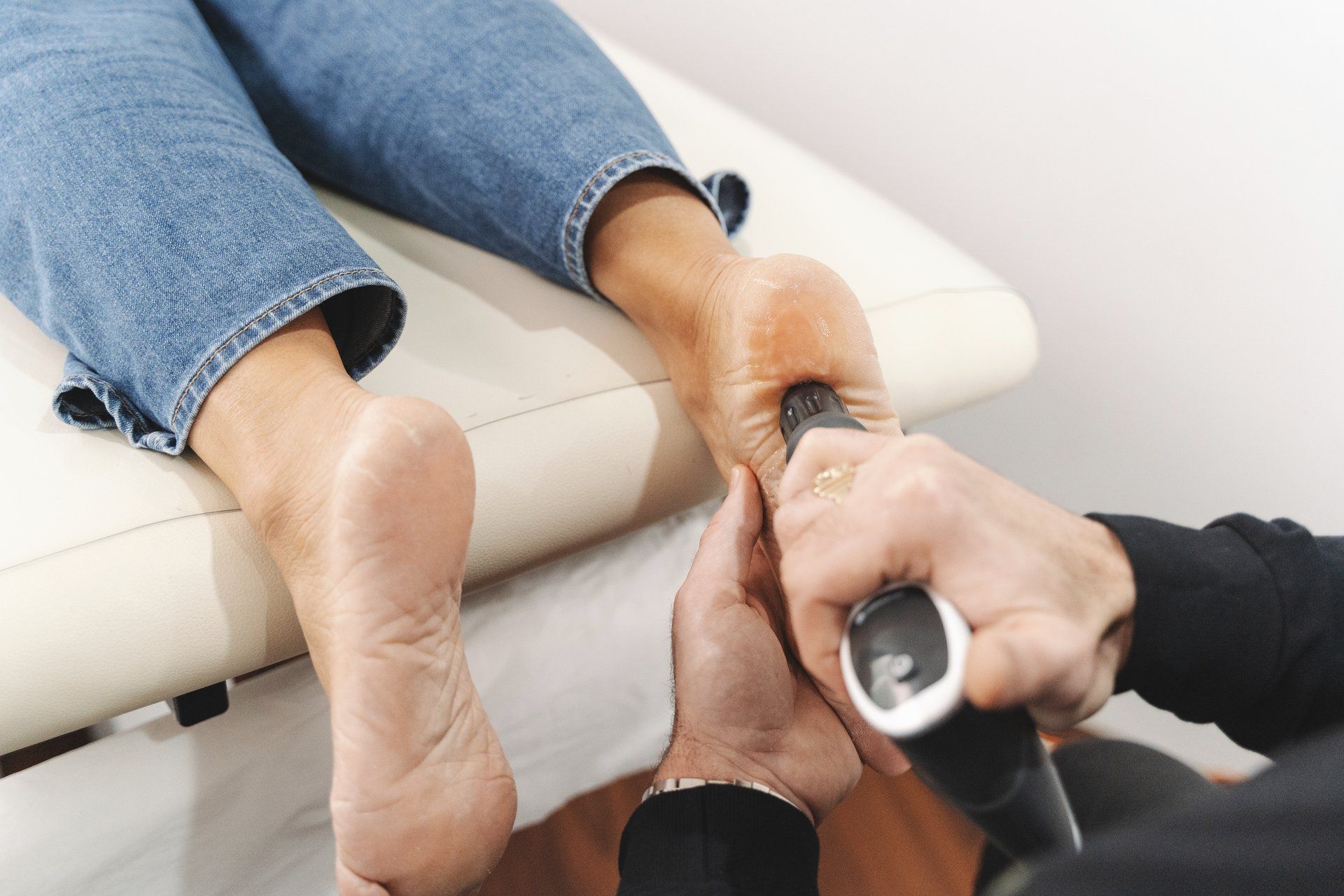
If pain persists or worsens despite exercise, or if it’s affecting your daily activity, consult a qualified podiatrist or physiotherapist. You may benefit from a tailored rehab plan, imaging, or adjunct therapies like shockwave.
Bottom Line:
Achilles Tendinopathy can be frustrating, but with the right progressive loading approach, most people return to full activity—even stronger than before and maintaining it!